Penny skateboards are available on every corner for something under 20€. They are a lot of fun to ride on and are very useful when someone has to travel a great distance in pedestrian only area. But what happens when a 2.5 kW electric motor is attached on it? Scroll down to find out.
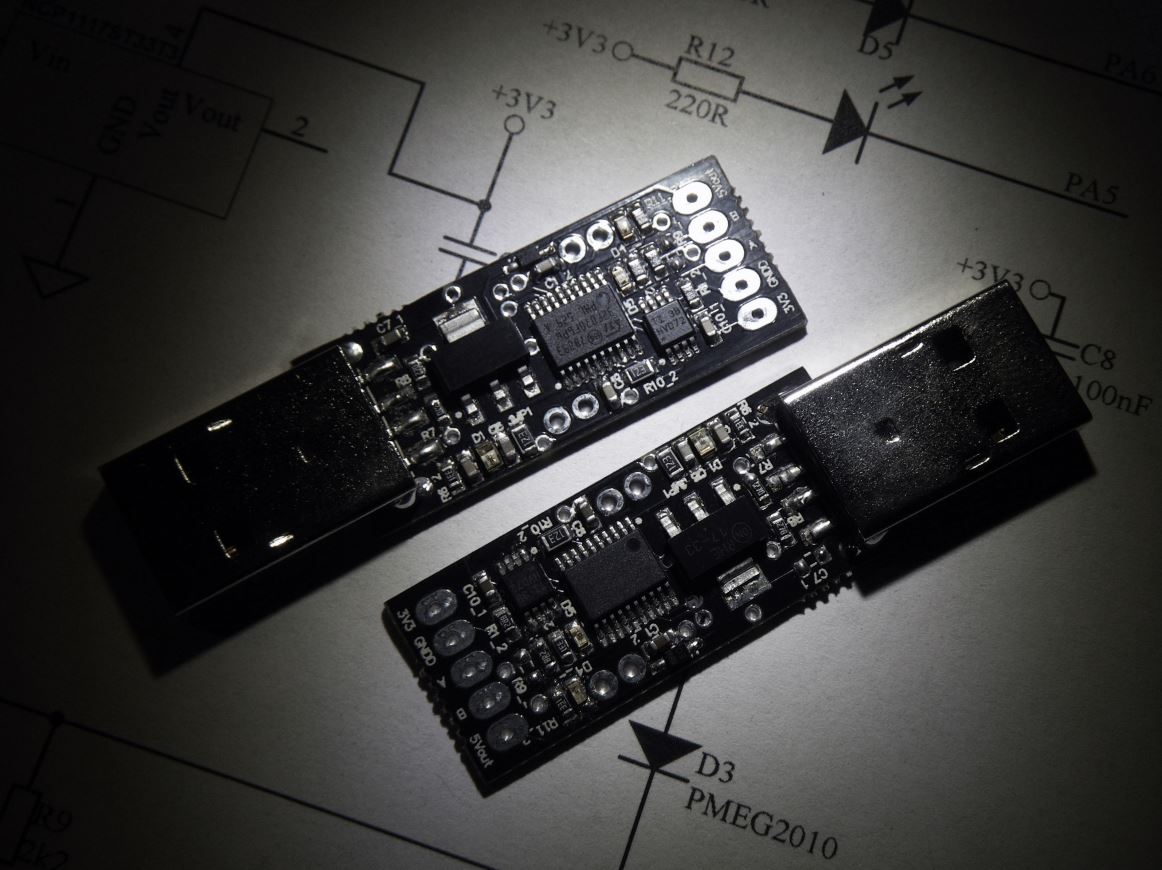
USB/RS485 module on a single sided board worked successfully for several months. The code is now stable and I decided to order small batch of double sided PCBs for this project. Here is documentation:
Light Emitting Dance shades – general purpose party accessory.
LED Shades v0.3
About this project
I believe many young adults like to party and with the rapidly growing EDM community a lot of people attend parties with electronic music. I am one of them and you can probably tell where I got the idea to make the LED shades. Projects like this one don’t just keep me occupied in my free time but are also designed to broaden my knowledge in electronics and programming. Continue reading ‘LED shades’ »
New revision of Si7013 sensor module – machined boards
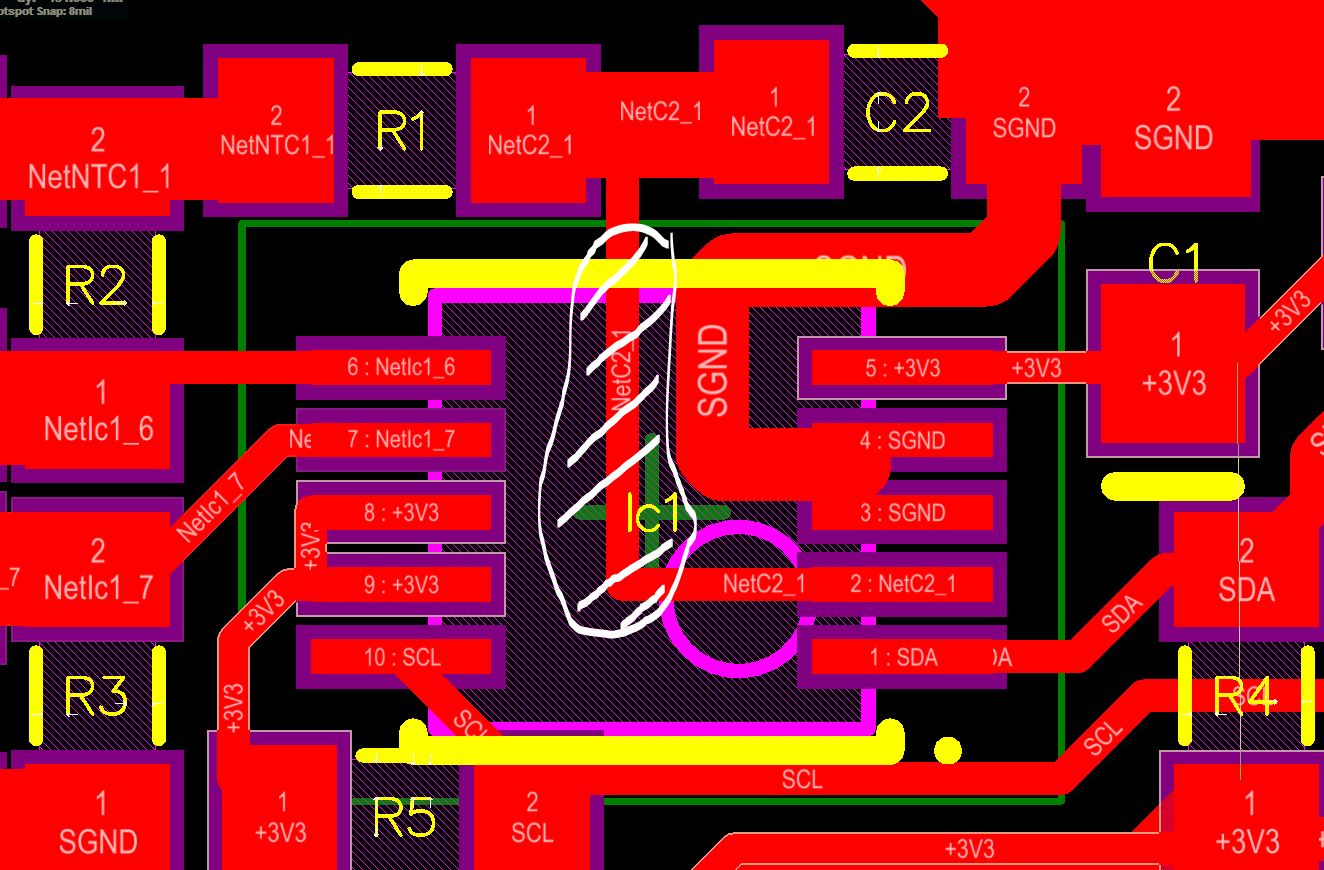
The boards are solder “plated” and prepared for assembly process. However, there is one issue with Si7013. It comes in SMD housing without leads. This is no big trouble, but the thermal pad is, because there is trace routed under the Si7013, which is not GND:
The “problematic” trace is white hatched.
That means it must not be soldered to thermal pad. The good thing is, the thermal pad can be left floating.
Microcontroller with serial bus or USB CDC (virtual COM port) is usually connected to some terminal. User then type commands and firmware in the microcontroller interprets entered commands.
Developing simple interpreter is not very scientific task, more like PITA with repeating chunks of the code. After couple of successful projects with such interpreter I can say my code is somehow tested and proven in the practice. Now I prepared one application which can shorten development process and make my life easier when I start application in new device.
The source code generator generates only command line interpreter. It provides all identifiers for selected commands, provides function prototypes for each command and text template for help. Finally only the functions for executing specific commands should be then implemented.
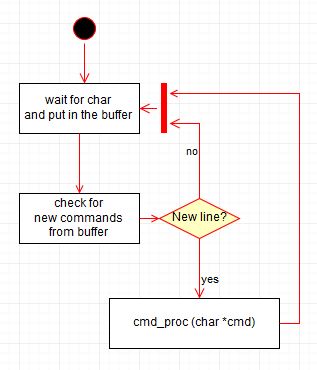
The final application can be either multi-threaded with RTOS, or flat single thread. In both cases, there should be some function or ISR checking for new char and feeding this char to the command line editor. When new line “arrives”, the function cmd_proc() is called and then the magic happens.
General structure of the caller thread or application
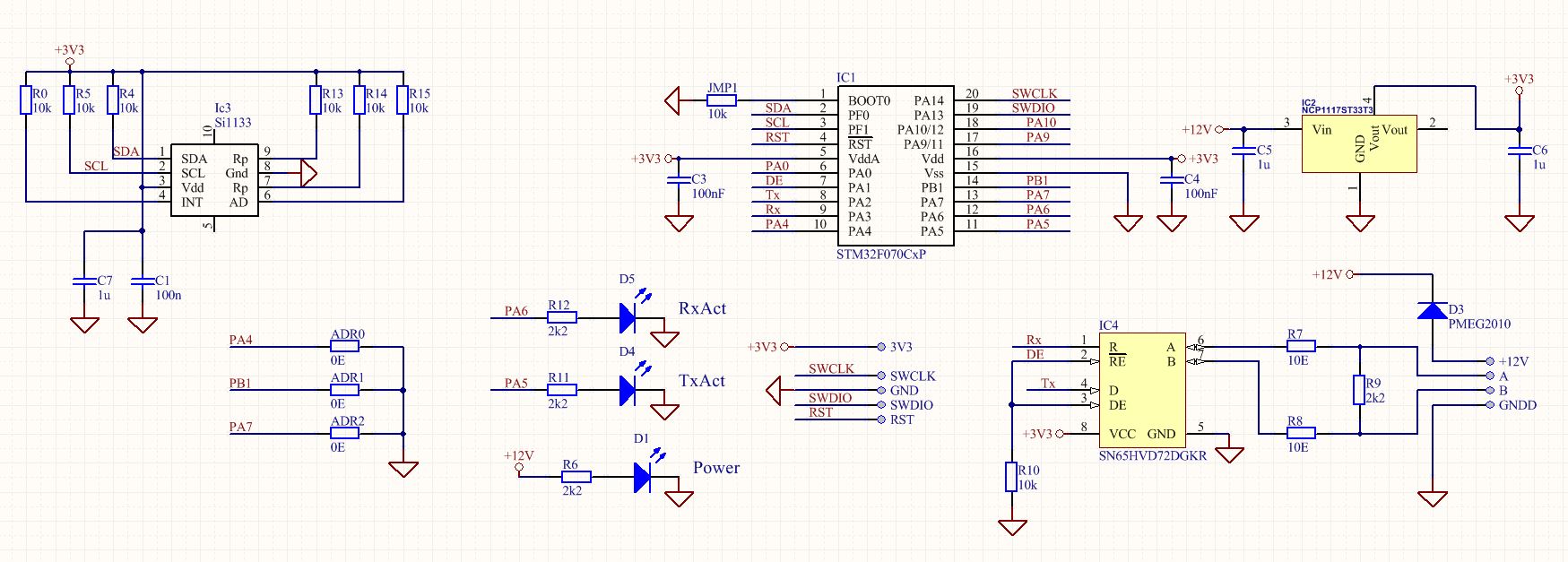
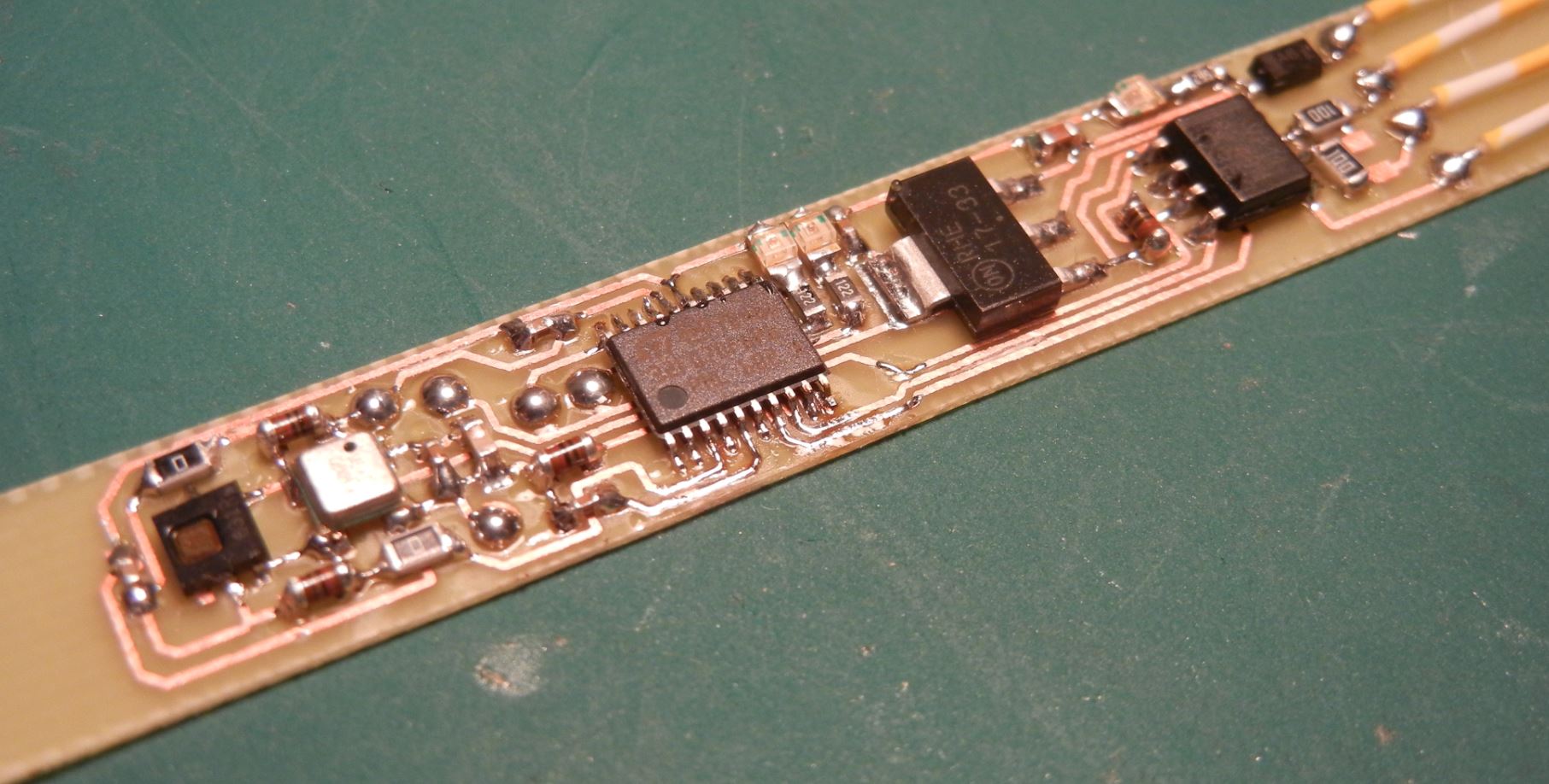
This is anothe small module to measure air pressure, temperature and humidity. Two sensors are on-board: MS5637 and HDC1080. Microcontroller is small cortex M0 in TSSOP-20 housing from STM: STM32F070CxP. The SN65HVD72DGKR provides RS485 interface functionality with half duplex mode. Voltage regulator, reverse polarity protection and some LED indicators are provided on-board. Complete module is 10x55mm, produced on single-sided PCB, easily producible in every home lab with proto-PCB capability.
This keyboard is more than 10 years old. I got it for free but it had its problems. First one was a PS/2 interface. Not ideal for a keyboard used in 2016. Second problem was software for programming this keyboard. It came on not one, but two diskettes with DOS and Windows versions of the software.
That’s where I decided to take it apart and replace electronics inside. New controller is based on KeyWarrior IC which is capable of scanning 16×8 matrix.
This keyboard merges a standard keyboard with a jog controller for a CNC machine. Upper half are “normal” keys and bottom half is for controlling my CNC machine. The shortcut keys will save me a lot of time and trouble when working with the machine.